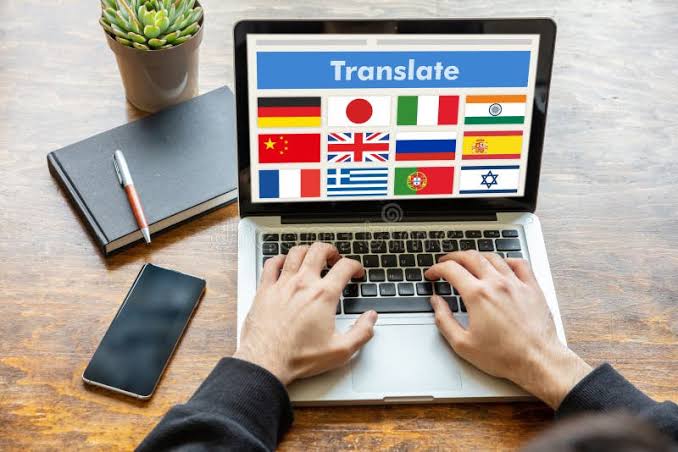
Disorganized customer conversations don’t just frustrate customers. They dismantle team efficiency and create safety nets for problems to slip through. When a customer follows up after three days, does your team know their history? When someone raises a critical issue, does it get priority immediately? When international customers send messages in multiple languages, does your team coordinate response effectively? Most support operations struggle with these basic organizational challenges, and language barriers amplify the problems exponentially. The solution requires two things working together: proper organization of customer interactions and seamless language translation. Neither works effectively without the other. Customer tagging systems without translation create language silos. Translation systems without customer organization lose context and create duplicate work. But when these elements work together, something powerful emerges: a support operation that’s organized, responsive, and genuinely customer-centric.
Why Customer Organization Matters More Than You Think
Picture a common scenario: a customer contacts support with a billing question. Two days later, they send an update in Portuguese. Your Spanish-speaking agent handles the initial inquiry, but no one connects it to the follow-up because it’s in a different language and no clear tagging system links them. The customer feels like you’re not listening. They repeat information. Your team duplicates work. The issue escalates unnecessarily.
This fragmentation happens constantly in support operations without proper organization. Customers aren’t just asking isolated questions. They’re expressing concerns, building relationships, and deciding whether to remain loyal or leave. When your systems don’t reflect this complexity, service quality suffers.
Customer tagging systems solve this by allowing agents to categorize interactions beyond surface level. A conversation isn’t just “billing question.” It’s tagged as “billing question,” “VIP customer,” “retention risk,” and “needs follow-up on Monday.” These tags create visibility across your team. When that Portuguese follow-up arrives, another agent can immediately see it’s from a tagged customer with context, find the original conversation, and provide seamless support.
Integration: Tagging and Translation Working as One System
The breakthrough comes when tagging and translation exist within the same platform. As conversations flow in multiple languages, agents tag them appropriately. Translation makes the content accessible regardless of what language it arrived in. An agent in Boston can instantly understand a customer concern from Rio de Janeiro because translation is automatic, and tags show customer context and history.
This integration transforms how teams work. Agents no longer need to be language specialists. They need to be customer specialists. They understand their customers deeply because systems make that history visible. They can focus on problem-solving instead of translation logistics.
Consider workflow improvements: a customer contacts you in Mandarin about a product issue. The system translates the message, and the agent immediately sees tags indicating this is a high-value customer with previous issues. The agent understands context instantly and can provide informed, empathetic support. Translation handles language. Tags handle organizational intelligence. Together, they create efficiency.
Real-World Team Productivity Gains
A customer support team managing 200 conversations daily across 8 languages recently implemented integrated tagging and translation. In the first month, their average resolution time dropped from 6.2 hours to 3.1 hours. Why? Not because they got faster at translating. Because they eliminated unnecessary back-and-forth. Agents had full context from the beginning.
Customer escalations decreased by 42% because issues were addressed properly the first time instead of bouncing between agents who were missing context. New agents could provide excellent support immediately because tags showed them customer history and preferred communication style. Training time dropped because they could follow the tagged conversation flow instead of needing complete language fluency.
The same team reported improved work satisfaction. Agents felt more confident because they had better information. They spent less time on administrative friction and more time actually helping customers. This psychological shift reduces burnout and improves retention.
Building Systems for Growth and Flexibility
As companies scale, support operations face a fundamental choice: do we hire specialized people to handle complexity, or do we build systems that handle complexity? The first approach creates rigid structures that break when growth accelerates. The second creates organizations that scale smoothly.
Integrated tagging and translation represent a system-first approach. You’re explicitly choosing to let technology handle the variables (language translation, customer history retrieval) so your team handles the constants (empathy, expertise, relationship building). This works at any scale. A team of three or thirty can operate efficiently with the same tools because the infrastructure removes organizational friction.
Conclusion:
Building truly efficient support teams requires addressing both language barriers and organizational chaos simultaneously. When customer tag management and image translation work together within a unified platform, your team becomes more responsive, more organized, and more capable of delivering exceptional service across multiple languages. The most productive support operations aren’t the largest. They’re the most intelligently structured.
FAQ
Q: What kinds of tags are most useful in a multilingual operation?
A: Customer value (VIP, regular, new), issue urgency (critical, high, routine), issue type (billing, technical, general), and follow-up requirements. Start simple and expand based on what your team finds valuable.
Q: Can tags be applied automatically based on conversation content?
A: Yes, sophisticated systems use AI to suggest tags based on content analysis. Agents can confirm or override, which creates both efficiency and accuracy.
Q: How does this change as your support team grows?
A: Properly designed systems scale linearly. You can add agents and channels without exponential complexity increases because organization is built into the infrastructure.
Q: What’s the learning curve for new agents joining a tagged, translated workflow?
A: Generally very short, typically 2-3 days. Because context is visible and systems are intuitive, new agents become productive quickly without requiring specialized training in language skills.


